


You’re watching a T20 match with friends. India are batting. The screen shows 178/4 (18.2), and the commentator says the required run rate has dropped to 5.4. Everyone around you nods. You have no idea what just happened.
That feeling is more common than people admit. The cricket scoreboard packs five or six pieces of information into a single short line. Once you learn to read it, the whole game opens up differently.
What That Score on Your Screen Actually Means
Take the example above: 178/4 (18.2)
It breaks into three parts:
- 178 — runs scored so far
- 4 — wickets lost batters who are out
- (18.2) — overs bowled so far 18 complete overs, plus 2 balls of the 19th
Every live score on your TV or JioCinema app follows this pattern. The batting team is shown first. So when you see India 178/4, India have scored 178 runs and lost 4 batters. Six more batters are still to come.
Runs The Basic Currency of Cricket
A run is the basic unit of scoring. Two batters run between the wickets after hitting the ball, and each run counts. If the ball reaches the boundary rope along the ground, it’s 4 runs automatically. If it clears the rope in the air, it’s a 6, and the crowd stands up.
You’ll also hear about extras, which are runs given to the batting team without them hitting the ball. A wide too far from the batter, a no-ball illegal delivery by the bowler, or a bye ball passes everyone all add runs to the team’s total. Extras seem small, but in a match that finishes with a 2-run margin, those no-balls become very expensive mistakes.
Wickets The Other Number That Changes Everything

A wicket means a batter is dismissed. Each team has 10 wickets to lose. When all 10 are gone, the innings ends, even if overs remain.
This is why the wicket count matters as much as the runs. A score of 145/2 in 15 overs tells a very different story from 145/8 in 15 overs. Both teams have the same runs, but the second one has nearly run out of batters. One more wicket and the tail-enders are in, and scoring quickly becomes very hard.
When a batter gets out without scoring a single run, that’s called a duck. Getting out on the very first ball is a golden duck, which you’ll often see mentioned in post-match discussions with a certain sad tone.
Cricket Score Terms New Fans Get Confused By Overs and Balls
An over is a set of 6 balls bowled from one end of the pitch. After every over, a different bowler comes in from the other end. In a T20 match, each team faces a maximum of 20 overs, giving 120 balls to score as many runs as possible. In a 50-over ODI, each team gets 300 balls.
One over in which the bowler gives away zero runs is called a maiden over. It’s rare in T20 but a big achievement in Test cricket, where the game moves slowly and each run counts more.
Bowlers have a limit too. In T20, no bowler can bowl more than 4 overs. In an ODI, the maximum is 10 overs. This forces captains to manage their bowling attack carefully.
Run Rate, Required Run Rate, and Economy Rate
The run rate RR is how many runs a team scores per over on average. Divide total runs by overs bowled. If India have scored 120 in 15 overs, the run rate is 8.0.
The required run rate RRR only applies to the chasing team. It tells you how many runs per over they need from this point to win. A rising RRR means the pressure is building. In T20, if the RRR crosses 12, the chasing team is in serious trouble.
For bowlers, you hear about the economy rate: runs given away per over. A T20 bowler with an economy of 6.5 is doing very well. Above 10 means the batters are hitting freely.
NRR The Number That Decides the IPL Standings
In tournaments like the IPL or the ICC World Cup, teams on equal points are separated by NRR, or Net Run Rate. It’s the difference between how quickly your team scores batting run rate and how quickly your opponents scored against you bowling run rate.
A positive NRR means you’re winning more convincingly than you’re losing. A team can finish with the same number of wins as another side but still miss the playoffs because their NRR is lower.
| Term | What It Means |
|---|---|
| RR (Run Rate) | Average runs scored per over, so far |
| RRR (Required Run Rate) | Runs needed per over to win the chase |
| Economy Rate | Runs given by a bowler per over |
| NRR | Tournament tiebreaker: batting rate minus bowling rate |
| Extras | Bonus runs due to wides, no-balls, byes |
| Duck | A batter dismissed without scoring |
Platforms like lotus365 cricket track these live stats across formats and tournaments.
When Rain Interrupts The DLS Method
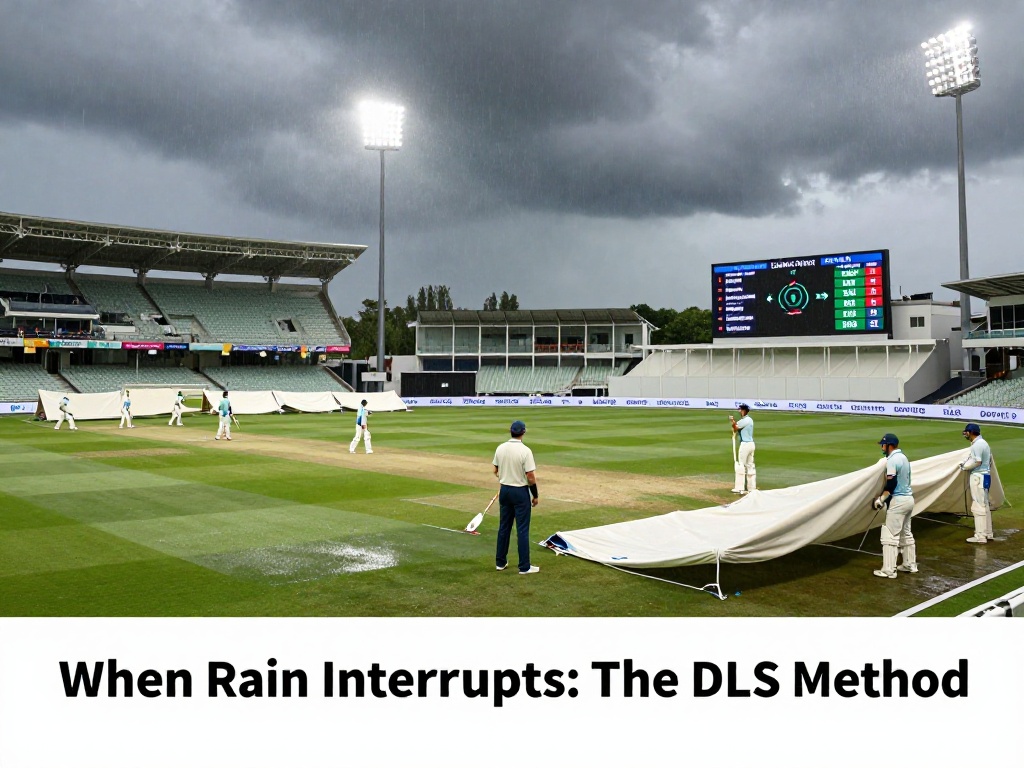
Rain is cricket’s oldest problem. When a match gets cut short, the target for the chasing team is recalculated using the DLS method Duckworth-Lewis-Stern, which the International Cricket Council formally adopted in 1999.
The method considers two resources each team has: overs remaining and wickets in hand. If rain reduces the match from 50 overs to 30, the target doesn’t simply drop by 40 percent. The DLS formula takes into account how many wickets the batting team had already lost, because a team with 8 wickets in hand can accelerate more than one with 3.
When you see a news headline saying India won by DLS method, it just means the result was based on the revised target, not the original one.
A Few More Terms Worth Knowing
A century is when a batter scores 100 or more runs in a single innings. A half-century or fifty is 50 runs. Both are marked by the batter raising their bat to the crowd.
All out means the batting side lost all 10 wickets before finishing their overs. The innings ends right there. In Test cricket, a team can also declare their innings, which means voluntarily closing it when they believe they have enough runs.
Once you’re comfortable with these terms, you’ll find yourself tracking the score naturally. You can pull up live match stats any time after lotus365 login or through any cricket app. The numbers stop being noise and start telling you the story of the match.